2005–Present — Looking for Angola Initiative

Founded in 2005 by Vickie Oldham, the Looking for Angola initiative seeks to uncover and document the history of a previously overlooked early Black settlement in the region. The project combines archaeological research with community storytelling to reconstruct this lost chapter of Florida’s past.

A key site tied to this history is Manatee Mineral Spring Park in Bradenton, recognized as part of the National Underground Railroad Network to Freedom. Through ongoing research and public education, the initiative continues to deepen understanding of early freedom-seeking communities in the area.


January 2025 — Cultural Center Celebrates First Anniversary

In January 2025, the Sarasota African American Cultural Center celebrated its first anniversary at the Leonard Reid House. The milestone marked a successful first year of programming, community engagement, and cultural preservation.

Over the year, the center became a gathering place for exhibitions, music festivals, spoken word performances, and art classes. Its continued growth highlights the importance of dedicated spaces that uplift and share African American history and culture in Sarasota.

April 19, 2024 — Newtown Added to National Register of Historic Places

On April 19, 2024, the Newtown Historic District was officially listed in the National Register of Historic Places. This designation made it the largest historic district in Sarasota and the largest Black historic district in the state of Florida.

Established in 1914, Newtown was originally developed as a community for African American residents who had been displaced from other areas. Today, the district includes more than 700 contributing historic resources, including homes, churches, and cultural landmarks that collectively tell the story of resilience and community-building.

January 2024 — Leonard Reid House Opens as Cultural Center

Following extensive renovations, the Leonard Reid House reopened to the public in January 2024 as the Sarasota African American Cultural Center. The restored space now serves as a hub for preserving and celebrating the history of Sarasota’s Black community.

Operated by the Sarasota African American Cultural Coalition, the center hosts art exhibitions, educational programs, live performances, and community events. Its transformation from a historic residence into a vibrant cultural institution reflects Newtown’s ongoing commitment to honoring its past while building its future.

May 27, 2022 — Leonard Reid House Relocated

On May 27, 2022, the historic Leonard Reid House was successfully relocated from Sarasota’s Rosemary District (formerly Overtown) to its new home in the Newtown community. Originally built in 1926, the 1,400-square-foot structure was moved to a city-owned lot at 2529 North Orange Avenue.

The relocation was a significant preservation effort, ensuring that an important piece of Sarasota’s Black history remained intact. By placing the home within Newtown, the project strengthened the community’s role as a center for African American heritage and storytelling.

2020 — Newtown Conservation Historic District Approved

In 2020, the Sarasota City Commission approved the designation of the Newtown Conservation Historic District. This local recognition was a major step in protecting the architectural and cultural integrity of the neighborhood while acknowledging its historical importance.

The designation also introduced financial incentives for preservation. Property owners within the district became eligible for city and county ad valorem tax exemptions when making qualified improvements, encouraging long-term investment in maintaining Newtown’s historic character.

2019 — Newtown Joins the U.S. Civil Rights Trail

In 2019, the Newtown African American Heritage Trail was officially added as the southernmost point of the U.S. Civil Rights Trail. This recognition placed Newtown on a national stage, honoring its role in the broader struggle for civil rights in America. The trail highlights key locations tied to Sarasota’s Black history and activism.

One of the most significant events commemorated is the peaceful “wade-in” protests at Lido Beach. These demonstrations challenged segregation and ultimately led to the desegregation of Sarasota’s public beaches, marking a pivotal moment in local civil rights history.

Approval for Newtown Website

The Board of Sarasota County Commissioners granted final approval for development of a Newtown website on January 26, 2016.

Buck O’Neil – Baseball Hall of Fame honored 17 pioneers of Negro League baseball

In 2006, the Baseball Hall of Fame honored 17 pioneers of Negro League baseball—16 men and one woman—whose contributions were vital to the sport’s history and legacy. During the induction ceremony, Buck O’Neil delivered heartfelt opening remarks, paying tribute to these trailblazers and celebrating their enduring impact on the game.

Groundbreaking held

In 2016, a groundbreaking was held on November 9 for a Sarasota Memorial Health Care System outpatient clinic’s construction at 1825 Dr. Martin Luther King, Jr. Way. Expected completion date is Summer 2017.  The clinic will offer primary and preventative care by resident physicians training in the Internal Medicine Residency Program at Sarasota Memorial. They will be under the supervision of physicians on the faculty of Florida State University College of Medicine.

The Newtown Conservation Historic District Project starts

In 2015, the Newtown Conservation Historic District Project kicks off with a team of experts selected to document Newtown’s 100-year history in a research report, through oral histories and an analysis of historic resources. The team consists of  volunteer researchers from ASALH and the community; and Project Director Vickie Oldham, Cultural Anthropologist Dr. Rosalyn Howard, Architectural historian Dave Baber, Sarasota architect Chris Wenzel and social media strategist and photographer Kacey Troupe.

Robert L. Taylor Community Complex opens

The 44,000 square foot Robert L. Taylor Community Complex opened with amenities and activities for all ages with a strong focus on programs for teens in 2011. 

Brownfield

The EPA designated the former city “dump” site in Newtown as a “Brownfield” in 2004.

Overtown stakeholders

Overtown stakeholders reached a consensus to seek Historic District designation in 2001.

Newtown Little League becomes part of Little League International

In 1984, Newtown Little League became part of Little League International and opened up play the first weekend in April with eight teams. The founder and President was Fredd Atkins; the Vice President was Ricky Thomas and the Head Coach of Officials was Ervin Crummer.

Federal lawsuit was filed by Newtown activists against the City of Sarasota

In the year 1979, a federal lawsuit was filed by Newtown activists against the City of Sarasota. The plaintiffs were Edward James, William F. Jackson, John H. Rivers, and Sheila E. Sanders. Fred E. Soto, Mayor of Sarasota; Ron Norman, Vice-Mayor; T.J. “Tony” Saprito, Rita Roehr, and William McCullough were the defendants.

The suit sought a judgment against Sarasota’s at-large system that diluted black voting strength. The plaintiffs wanted an injunction to prevent the defendants from holding any other elections under the at-large system. They also wanted the court to order that city commissioners be elected from single-member districts.

McCown Towers

In 1978, public housing development “McCown Towers” opens with 175 units

Black Almanac hosted by Dr. Ed James II

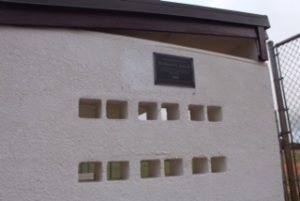
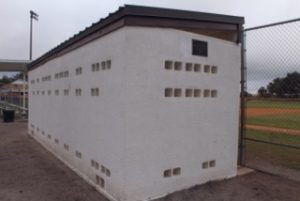
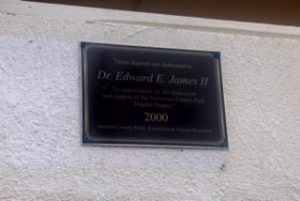
The show “Black Almanac” hosted by Dr. Ed James II begins the 2nd week of April 1972 on Sarasota’s ABC affiliate, ABC 7. Dr. Edward James II requested the construction of a dugout at the Newtown Estates baseball field to protect players from inclement weather. The dugout is dedicated in honor of Dr. James.


IMG_3720 IMG_3719 IMG_3717

Riverview’s First African American Commencement Speaker

In the 1970s Walter Reid, Jr presented a farewell to his high school by becoming the first African American to give the graduating speech to the then recently integrated Riverview High School. Reid’s presentation was so dynamic the he received a standing ovation from the crowd in attendance, and the media coverage the next day filled with accolades.

In his years at the integrated Riverview High School, he was the only African American that was a member of the National Honor Society, and graduated with High Honors.

Bertha Mitchell

The public housing development “Bertha Mitchell” opens with 100 units in 1960.

Dr. John W. Chenault moves to Sarasota

In the year of 1957, Dr. John W. Chenault moved to Sarasota from Tallahassee. On the year of 1957, Dr. John W. Chenault moved to Sarasota from Tallahassee. Chenault had the first African American medical office in Newtown and was the first African American given practicing privileges at Sarasota Memorial Hospital.


Roland W. Rogers arrives in Sarasota as principal of Booker School

In 1946, Roland W. Rogers arrives in Sarasota as principal of Booker School. Former students described him as a disciplinarian with a booming voice who taught the mantra “cleanliness is next to godliness.” In collaboration with dedicated teachers, parents and other concerned citizens of Newtown, Booker schools developed new academic and sports programs and were consolidated. They also achieved accreditation by the Southern Association of Education.

Emma E. Booker obtains bachelor’s degree

In the year of 1937, Emma E. Booker obtained her bachelor’s degree after 20 years of part-time study. During that same period, she was a school principal and teacher.

Newtown development accelerated

During the 1930s and 40s, Sarasota accelerates the development of Newtown with the construction of a housing project along Orange Avenue and increased housing standards in the Overtown area.

Knights of Pythias Hall School celebrated first graduating class

In the year of 1923, The Knights of Pythias Hall School celebrated its first graduating class. The staff included Principal Emma Edwina Booker and teachers Aravia Benton Johnson, Lucinda Wiggins and Mayme Williams Faulk. Quessie M. Hall was in the first graduating class.

Anti-black Race Riots

In 1919, Anti-black race riots erupted in 26 cities across the country during the summer and fall.

World War I Recruits

Recruiting officer Charles Ayler (from Bradenton) recruited black and white men to serve for battle in WWI, October 2,  1917.

Newtown was established

In the year of 1914, Newtown was established. The neighborhood was platted by C.N. Thompson and son on April 20. The subdivision contained 240 lots on forty acres designated “exclusively for colored people”.

Leonard Reid arrived in Sarasota

In 1900, Leonard Reid arrived in Sarasota from South Carolina. He graduated as valedictorian from Savannah Normal School before coming to Sarasota where he became a community leader.

Colson worked with Robert E. Paulson

 In 1885 Colson worked with Robert E. Paulson to survey and plat the original town of Sarasota for the Florida Mortgage and Investment Company.

Sarasota’s first black settler

Lewis Colson came to Sarasota with his wife Irene. He drove the first stake into the ground to assist Richard Paulson in platting the town of Sarasota at Five Points in 1885. Sarasota was platted by the Florida Mortgage and Investment Company, a Scottish entity.

Jeffrey Bolding

Jeffrey Bolding, formerly enslaved in North Carolina came to the area in 1857 and worked for the Whitaker Family. He died at age 70 in 1904.

U.S. Navy Attacks Prospect Bluff Fort

Under the direction of then Gen. Andrew Jackson, the U.S. Navy attacks Prospect Bluff Fort. A cannon ball strikes the fort’s stockpile of ammunition causing an explosion that instantly kills about 270 of 320 inhabitants. Some survivors, including the fort’s Black commandant Garcon, were executed. Displaced Blacks moved south and throughout Florida.

The Patriots War

During the Patriots War, more Blacks ally with the British. Their forces are defeated. In 1815, the British leave a fort at Prospect Bluff on the Apalachicola River to Blacks where they reside and create villages nearby with Native American allies. The place becomes known as Negro Fort.

The War of 1812

The War of 1812 begins. In West Florida, British forces enlist both Blacks and Native Americans. The ensuing fight in the region becomes known as the Patriots War. Sarrazota (also known as Angola) existed in the Tampa Bay-Sarasota-Manatee area. Florida was a sovereign territory of Spain. Free people of color, formerly enslaved Africans (some were called Black Seminoles and Seminole Indians) lived along the Manatee River in a farming community that stretched into Sarasota.